Compare
Opry show or backstage tour?
The Opry show or the daytime backstage tour: what you get from each, the time each needs, which suits a non-fan or a family, and how to fit both into one day.
Choose a date and a section ↗Quick answer
Choose the show if you want to hear the Opry: about two hours of live music from several acts, broadcast on the radio as you watch. Choose the backstage tour if you want to see how the house works: an hour with a guide through dressing rooms and the green room, with a chance of a photo on the stage. If you have a full day, do both, tour first and show in the evening; one tour option even runs straight after a show.
| Opry show | Backstage tour | |
|---|---|---|
| Length | About two hours | About one hour |
| When | Evening shows | Daytime, or after a show |
| Live music | Yes, several acts | No |
| On the stage | Watch from a pew | Chance of a photo |
| Recording | No video | No video or audio |
The short answer
These are two different things that happen in the same building. The show is the Opry itself, the live radio broadcast that started in 1925, heard from a seat in the auditorium. The backstage tour is a guided walk through the parts of the Opry House the audience never sees, run in the daytime and, on one option, after a show. If your trip has room for only one, the show gives you more of what makes the Opry matter. If you have a free afternoon and an evening, booking both gives you the music and the story behind it.
- Only one evening free: book the show
- Free afternoon, busy evening: book the tour
- Both free: tour first, show later
What you get from the show
About two hours of live music with an interval, from several acts that change every night: newcomers, chart names and long-time members, with bluegrass, gospel and comedy in the mix. You sit on cushioned pews in a room of more than 4,000 seats, in the section you chose when you booked, and the whole evening goes out live on WSM. It is the one way to hear the Opry as its radio audience does, with the applause, the introductions and the surprise of not knowing who comes next. The ticket covers your seat; food and drinks are bought inside.
What the backstage tour gives you
An hour with a live guide who speaks English, through the working spaces behind the stage. The route takes in themed artist dressing rooms, the green room where performers wait, the artists' entrance and displays of photographs and memorabilia from across the Opry's history, with an interactive video along the way. The tour also offers the chance of a photo taken standing on the Opry stage. There is no performance on the tour, and spaces are limited, so if your time slot sells out you may be offered another one.
Standing in the circle
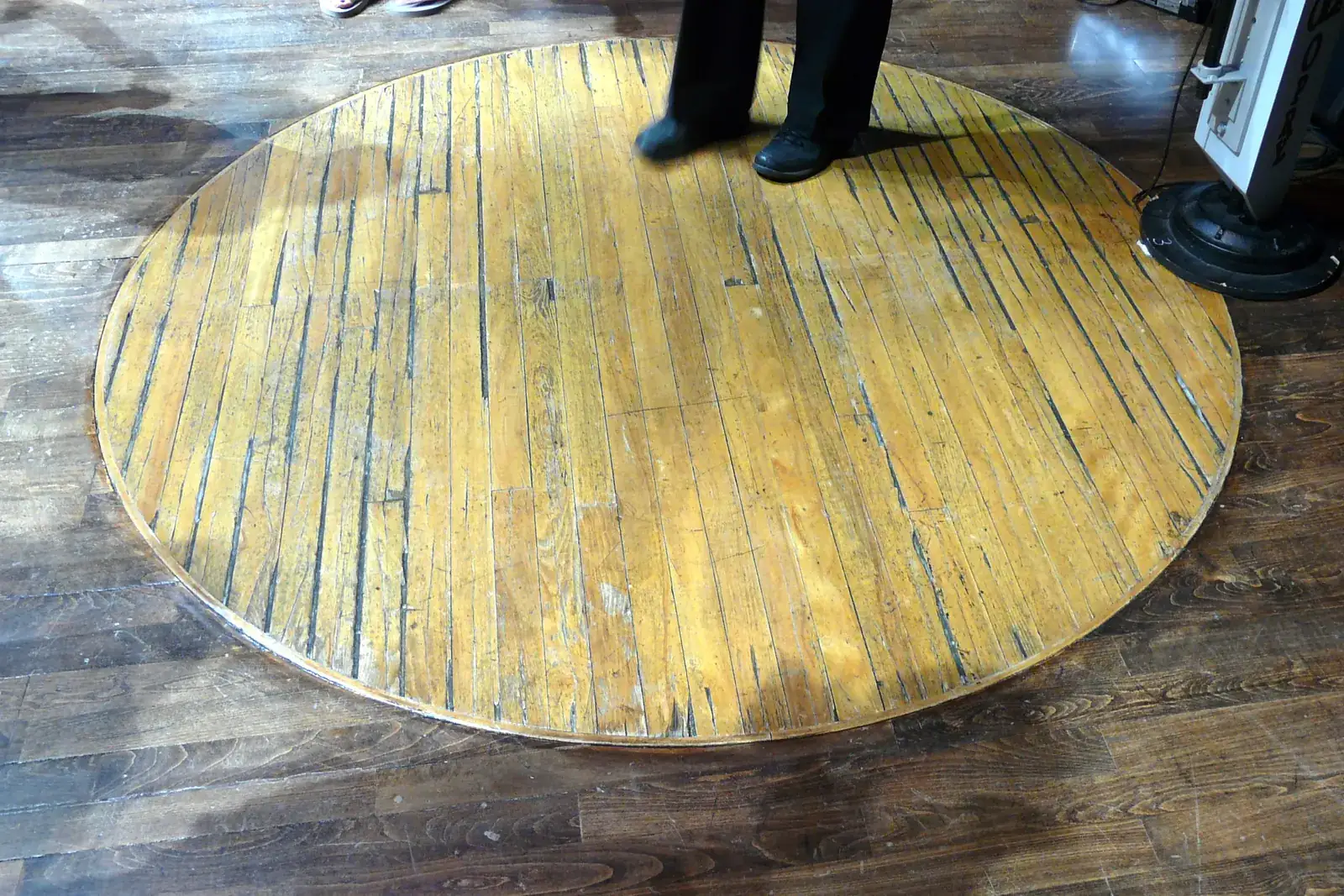
The best reason to take the tour is a round patch of old wood. When the Opry left the Ryman in 1974, a six-foot circle of oak was cut from a corner of the Ryman's stage and set into centre stage at the new Opry House, and artists still stand on it to perform. During the 2010 Nashville flood the stage went under water; the circle was restored and put back before shows resumed. At the show you see it from your seat. On the tour, the Opry's own description promises the chance to step into the circle where your favourite artists stood.
What only the show can do
The tour tells you about the music; the show lets you hear it. Nothing on the tour replaces the moment a fiddle tune kicks off in a full house, or the slightly old-fashioned rhythm of a radio show being made in front of you, with segments, introductions and an interval. The show also answers the line-up question in its own way: you come across performers you have never heard of, alongside names you know. With time for just one, and a wish to understand why the Opry has lasted a century, choose the show.
Which suits a first visit, or a non-fan
For a first visit to Nashville, the show is the better single choice, because it is the thing the Opry exists to do and it gives you the music, the room and the radio broadcast at once. For someone who is lukewarm about country music, the answer is less obvious. The show's mix of short sets, bluegrass, gospel and comedy keeps a non-fan entertained more often than not, but the tour asks less of you: one hour, no music, and a story about a building and its stars told by a guide.
Doing both in one day
The simplest plan is a daytime backstage tour, an afternoon downtown and the show in the evening. The tour takes about an hour, and the Opry House sits east of downtown, so you either stay in Music Valley between the two or drive back and forth. The backstage tour booking also offers a show ticket with a post-show backstage tour, which keeps everything in one evening and one trip out to Music Valley. Remember the show's confirmation can take up to 48 hours, so book the evening first, then build the day around it.
Booking windows and changes
The two products behave differently once booked. The show is confirmed by the Opry within 48 hours, so it needs planning a couple of days ahead. The backstage tour has limited spaces per time slot, and if your slot sells out the operator may contact you with another time. Through GetYourGuide, either one refunds in full when cancelled a day or more ahead, and the tour also lets you hold a place now and pay closer to the date. Check each confirmation for the time and the venue.
Families, access and rules
Both are wheelchair accessible: the tour is listed as accessible, and the Opry House has accessible seats on its upper and lower levels. The show itself is billed as family-friendly. The rules differ slightly. At the show, personal cameras are allowed but video recording, selfie sticks, large bags and outside food and drinks are not. On the tour, cameras are welcome for that photo on stage, but video and audio recording, food and drinks, large bags and pets are not allowed; assistance dogs are the exception. Strollers at the Opry House must fold and be checked at the door.
Who this isn't for
Leave out the backstage tour if you have no interest in the Opry's history or its stars: without the music, an hour of dressing rooms and memorabilia means little. Skip the show if you need a fixed, named headliner or cannot sit for two hours. And if your only free time is a single afternoon downtown, neither is the easiest fit, because both take place in Music Valley; the Ryman's self-guided tour and the Country Music Hall of Fame downtown tell much of the same story without the drive.
How to book
Book the show first from the calendar on this page, choosing a date and a seating section, and allow up to 48 hours for the Opry's confirmation. Then add the backstage tour on the same or another day from the card below the calendar, or choose the option that pairs a show ticket with a post-show tour. Both bookings refund in full if you cancel through GetYourGuide at least a day ahead. If you are still deciding whether the show is for you at all, start with the guide to whether the Opry is worth it.
Read next: Is the Grand Ole Opry worth it?
Frequently asked questions
Is the Opry backstage tour worth it without seeing the show?
It is if the history interests you. You see dressing rooms, the green room and memorabilia, and may get a photo on the stage. There is no live music on the tour.
How long is the backstage tour?
Roughly an hour, led by an English-speaking guide.
Can I do the backstage tour after the show?
Yes. One option on the backstage tour booking pairs a show ticket with a tour after the show.
Can I stand on the Opry stage?
On the backstage tour you get the chance of a photo on the stage, including the circle of wood cut from the Ryman's stage. At the show you watch from your seat.
Which is better for children?
The show is billed as family-friendly but runs about two hours with an interval. The tour lasts about an hour, which suits shorter attention spans.
Are both in the same place?
Yes. Both take place at the Opry House in Music Valley, east of downtown Nashville.
Sources